Text-to-speech API for accessibility and assistive technology
Build screen readers, reading assistants, communication aids, and accessible content products with Soniox Text-to-Speech API. Generate faithful, natural speech across 60+ languages, respond in real time, and support personal voices so users can read, navigate, and communicate more naturally.
$0.70 per generated hour.
Trusted by teams building global voice products





































Text-to-speech built for assistive products
When people rely on speech to read, navigate, or communicate, voice output is part of the interface. Soniox Text-to-Speech API gives assistive products faithful speech for critical details, natural delivery for long listening sessions, real-time generation, personal voices, and multilingual support.
Keep critical details intact
Phone numbers, email addresses, verification codes, prices, dates, addresses, and identifiers need to be spoken clearly and completely. Soniox faithfully renders the text your application sends, so users can rely on spoken information when they cannot check the screen.
You can reach our support team at +1 415 682 9074.
Send the completed form to alex.chen+support@example.com.
Your verification code is 7Q4M9B. I repeat: 7Q4M9B.
Your delivery is going to 1427 North St. Andrews Place, Apartment 6B, Los Angeles, California 90028.
Your case number is CX-8047-A19, and the affected device is model XR-12 Pro.
Your total is $1,284.37, including tax and delivery.
Your appointment is scheduled for October 21, 2026, at 8:45 a.m.

Natural speech for long listening sessions
Generate speech with natural rhythm, pacing, emphasis, and expression that follows the meaning of the text, helping documents, articles, interfaces, and other long-form content remain comfortable to follow.

Natural and expressive
I thought I knew exactly how the evening would unfold. Then the phone rang. For a moment, I considered letting it go to voicemail—but something told me to answer.

Conversational
Absolutely. I found three flights that arrive before noon. The first is the least expensive, but the second gives you a much shorter connection. Would you like me to compare them?

Storytelling
By the time we reached the top of the hill, the sun was already beginning to set. We stopped for a moment, looked back at the road behind us, and realized the entire valley had turned gold.
Generate speech without making users wait
Stream text as it becomes available and begin playback before the full message is ready. Build communication aids, conversational interfaces, and dynamic reading experiences that respond quickly enough for natural interaction.
Let experienced listeners move faster
Reduce pauses between sentences and punctuation while keeping speech natural and fluent, giving users who consume large amounts of spoken content a faster way to move through it.
Give users a personal voice
Create a personal voice from a short reference recording and use it inside communication products instead of a generic system voice. The same cloned voice can be used across all 60+ supported languages.


Support users across 60+ languages
Every built-in and cloned Soniox voice can speak all 60+ supported languages and handle mixed-language text and foreign names naturally, so the same assistive product and voice can support users across languages.





















































Build two-way accessible communication
Pair Soniox Speech-to-Text API with Text-to-Speech API to caption what other people say and speak a user’s typed or selected response, bringing both sides of a conversation into one accessible experience.
Listen
Stream the other person's speech through Soniox Speech-to-Text API and display the transcript as live text or captions.
Compose
Let the user type, select, generate, or otherwise compose a reply through your communication or assistive interface.
Speak
Stream the response through Soniox Text-to-Speech API using the user's chosen built-in or personal cloned voice.
Text-to-speech API features for assistive technology
Build accessible voice interfaces with real-time generation, synchronized text, personal voices, multilingual support, and privacy controls.
Real-time speech generation
Send text in small chunks as it becomes available and receive audio without waiting for the complete input, reducing delay in communication and interactive assistive experiences.
Explore real-time generationCharacter-level timestamps
Receive start and end times for every spoken character so reading tools can synchronize highlighting, captions, focus, and other visual interfaces with generated speech.
Explore timestampsPersonal voice cloning
Create a personal voice from a reference clip in Soniox Console or through the API, then use its voice ID like any built-in voice across every supported language.
Explore voice cloningPrivacy and regional processing
Soniox does not store audio or transcript data unless you use a service that supports storage, and regional deployments keep processing within your selected region.
Explore security and privacySpeech infrastructure for massive scale
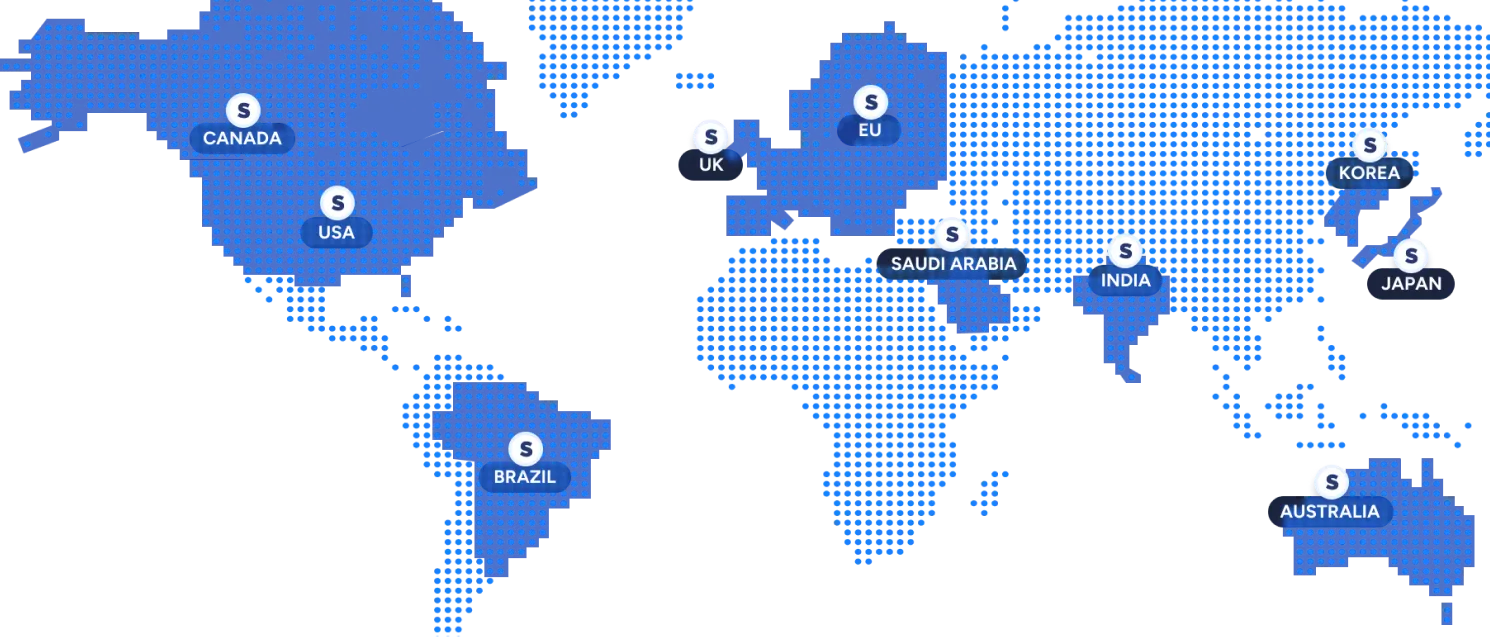
Build on one API and deploy in your region
Use the same models and API everywhere, with in-region processing to meet latency, data residency, and regulatory requirements.
Available: US, EU, Japan, India
Coming soon: Korea, Australia, Canada, Saudi Arabia, UK, Brazil
Run mission-critical systems with confidence
- 99.9% uptime
Production-hardened infrastructure with monitoring and redundancy. - low-latency streaming
Process speech in real time with low latency for responsive voice applications. - Priority support
Severity-based incident response with direct access to the Soniox team.

"Before Soniox, our international users always had a noticeably different experience. Now accuracy and responsiveness match across all regions…it feels like one system instead of five."
Alon Yair CTO of Onvego
Build voice into every assistive product
Add natural voice output and accessible communication to screen readers, reading assistants, AAC apps, navigation tools, and content platforms.
Screen readers
Add natural voice output to screen readers and accessibility interfaces that need to read UI text, web content, notifications, and data aloud.
Reading assistants
Build read-aloud experiences for documents, articles, and books with natural speech and synchronized text highlighting.
AAC and communication apps
Turn typed, selected, or generated messages into speech quickly so users can communicate naturally in live conversations.
Personal voice products
Let users communicate with a cloned personal voice instead of a generic system voice, across every supported language.
Navigation and wayfinding
Generate spoken directions, street names, addresses, and other navigation prompts clearly across multilingual environments.
Accessible content platforms
Add listen versions of web pages, documents, help content, and other written material directly inside your product.
Privacy and compliance, built right in
Never stored, never saved.
Audio stays in memory, everything is processed in real-time.
Built for privacy-critical use cases.
Adhering to leading global security, privacy, and compliance standards.
Trusted where privacy matters most.
Used in industries where speech is sensitive, from healthcare to enterprise.



Frequently asked questions about text-to-speech APIs for accessibility
How can I add text-to-speech to an accessibility or assistive product?
Send interface text, documents, messages, navigation prompts, or other content to Soniox Text-to-Speech API and receive generated speech your application can play directly.
Use REST for generated audio or WebSocket streaming when your product needs speech to begin while text is still arriving.
Can Soniox reliably speak numbers, email addresses, and codes?
Is Soniox suitable for AAC and real-time communication apps?
Can users communicate with a personal cloned voice?
Yes. Create a personal voice from a short reference recording through Soniox Console or the API and receive a voice ID your application can use like a built-in voice.
The same cloned voice can generate speech across all 60+ supported languages.
Can I highlight text while Soniox reads it aloud?
Can the same voice speak multiple languages in an assistive product?
Can I combine speech-to-text and text-to-speech for accessible communication?
Yes. Use Soniox Speech-to-Text API to transcribe what another person says and display it as live text or captions.
Then use Soniox Text-to-Speech API to speak the user's typed, selected, or generated reply in a built-in or personal voice.
Can I build screen readers and reading assistants?
How does Soniox handle speech data?
How much does generated speech cost?
Build accessible voice into your product
Add faithful speech, natural voices, real-time generation, personal voice cloning, synchronized text, and 60+ languages to the assistive products you build with Soniox Text-to-Speech API. Pair it with Soniox Speech-to-Text API for two-way accessible communication.