Turn every conversation into data you can analyze
Build speech analytics and conversation intelligence on accurate, speaker-aware transcripts. Process calls and conversations in real time or at scale, with timestamps, language identification, structured speech data, and support for 60+ languages.
Trusted by teams building global voice products



































Better speech analytics starts with better transcription
Speech analytics depends on understanding what was actually said, who said it, and when. Errors in names, numbers, terminology, speaker attribution, or language can distort everything built on top of the transcript. Soniox turns real-world conversations into accurate, structured speech data ready for analytics, search, QA, compliance, and downstream AI.
Capture conversations accurately
Transcribe real-world calls and recordings with accents, background noise, interruptions, names, numbers, and domain-specific terminology.
Preserve who said what
Automatically separate speakers so analytics can distinguish customers, agents, interviewers, participants, and other voices.
Analyze live or recorded speech
Stream transcripts during live conversations or process completed recordings asynchronously for large-scale analysis.
Analyze 60+ languages
Use one speech model across multilingual conversation data, including recordings where speakers switch languages naturally.
From spoken conversation to analytics-ready data
Soniox handles the speech layer so your analytics system can focus on understanding patterns across conversations.
1. Capture
Stream live audio or submit recorded calls and conversations for asynchronous processing.
2. Transcribe
Convert speech into accurate text across speakers, accents, languages, and real-world audio conditions.
3. Structure
Receive speaker labels, timestamps, language data, and structured transcript output.
4. Analyze
Feed transcripts into QA, compliance, search, analytics, BI, or your own AI models.
Structured speech data built for downstream analysis
Analytics systems need more than plain transcript text. Soniox preserves the structure around each conversation so downstream applications have better data to work with.
Speaker diarization
Automatically detect speaker changes and attach speaker labels to transcript output, preserving who said what across each conversation.
Explore speaker diarizationPrecise timestamps
Align transcript content with the source audio using token-level timestamps for search, playback, review, evidence, and conversation navigation.
Explore timestampsContext-aware recognition
Provide product names, brands, terminology, people, locations, and domain knowledge so important business vocabulary survives transcription accurately.
Explore context customizationStructured numbers, names, and IDs
Preserve important conversational details such as numbers, dates, times, email addresses, names, addresses, IDs, and codes in forms downstream systems can work with.
Automatic language identification
Identify spoken languages throughout the conversation, including recordings where speakers naturally switch between languages.
Explore language identificationReal-time and asynchronous processing
Analyze conversations as they happen or process completed audio archives at scale using the workflow that fits your product.
Speech infrastructure for massive scale
Build on one API and deploy in your region
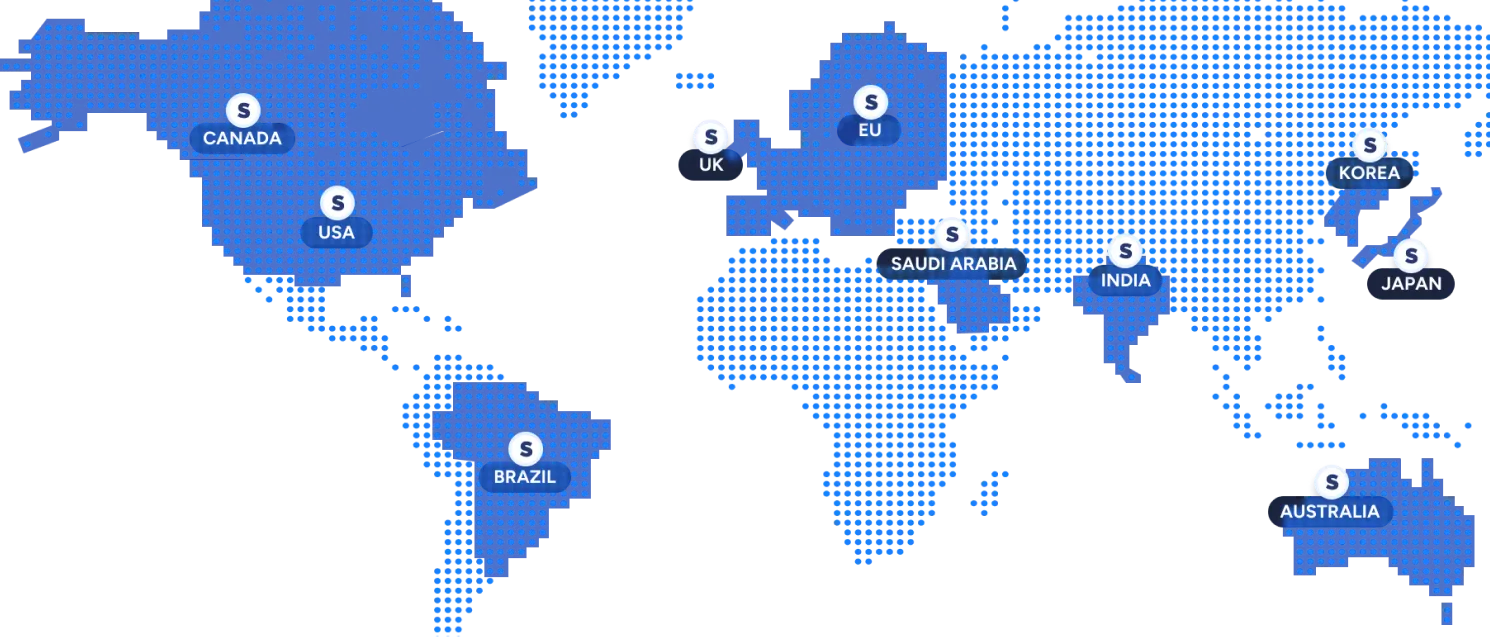
Use the same models and API everywhere, with in-region processing to meet latency, data residency, and regulatory requirements.
Available: US, EU, Japan, India
Coming soon: Korea, Australia, Canada, Saudi Arabia, UK, Brazil
Run mission-critical systems with confidence
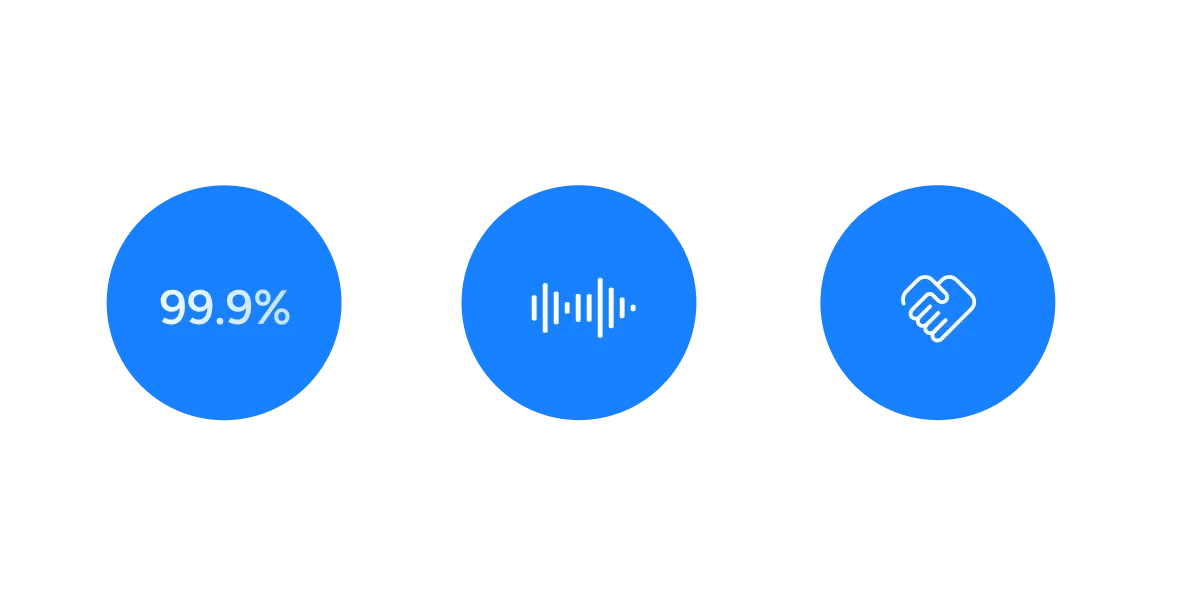
- 99.9% uptime
Production-hardened infrastructure with monitoring and redundancy. - low-latency streaming
Process speech in real time with low latency for responsive voice applications. - Priority support
Severity-based incident response with direct access to the Soniox team.

"Before Soniox, our international users always had a noticeably different experience. Now accuracy and responsiveness match across all regions…it feels like one system instead of five."
Alon Yair CTO of Onvego
Build every kind of speech analytics workflow
Turn conversation data into searchable, analyzable input for quality, compliance, customer intelligence, coaching, and business analytics.
Quality assurance
Turn calls into speaker-aware transcripts for automated QA, scorecards, coaching, and consistent review across large conversation volumes.
Compliance monitoring
Create searchable transcripts for detecting required disclosures, prohibited language, policy adherence, and conversations that need review.
Conversation intelligence
Transform spoken conversations into structured data for topics, trends, call drivers, outcomes, and downstream analysis.
Voice of the customer
Analyze what customers actually say across calls to uncover recurring questions, pain points, requests, and emerging issues.
Agent coaching
Build searchable conversation records that help teams find coaching opportunities and understand how agents handle real interactions.
Conversation search
Index large archives of calls, interviews, and spoken conversations so users and AI systems can find relevant moments quickly.
Analyze conversations in real time or after they happen
Some analytics need to react during a conversation. Others need the complete recording and the highest-quality transcript possible. Soniox supports both.
Real-time speech analytics
Stream transcript data while the conversation is happening for live monitoring, alerts, agent assist, routing, search, and real-time analysis.
Explore real-time transcriptionPost-call and batch analytics
Process completed calls, interviews, and conversation archives asynchronously for QA, compliance review, search, trend analysis, and large-scale data pipelines.
Explore asynchronous transcriptionMove beyond manually sampled conversations
Valuable signals are often buried across thousands of calls and conversations. Once speech becomes structured text, your analytics layer can search and evaluate far more interactions than teams can review manually.
Find recurring issues
Search conversation data for recurring questions, complaints, product issues, objections, and reasons customers contact your business.
Review conversations consistently
Give QA and compliance systems complete, speaker-aware transcripts instead of relying only on manually selected recordings.
Detect trends over time
Aggregate transcript data across conversations to identify changing topics, customer needs, operational problems, and emerging patterns.
One transcription layer across 60+ languages
Global conversation datasets should not require a different speech pipeline for every language. Soniox supports 60+ languages with one unified model and can identify languages throughout each recording.
Analyze multilingual conversations
Transcribe conversations across markets with one model, including audio where speakers switch languages during the same interaction.
Preserve language as data
Attach language information to transcript output so downstream systems can filter, route, segment, and analyze multilingual conversation datasets.
Privacy and compliance, built right in
Never stored, never saved.
Audio stays in memory, everything is processed in real-time.
Built for privacy-critical use cases.
Adhering to leading global security, privacy, and compliance standards.
Trusted where privacy matters most.
Used in industries where speech is sensitive, from healthcare to enterprise.




Frequently asked questions about speech analytics
What is speech analytics?
Speech analytics is the process of converting spoken conversations into data that can be searched and analyzed for patterns, topics, quality, compliance, customer insights, and other business signals.
Speech-to-text is typically the foundation of that workflow: audio is first converted into structured transcript data, which analytics or AI systems then analyze.
What is the difference between speech analytics and speech-to-text?
Speech-to-text converts spoken audio into text and associated metadata. Speech analytics uses that transcription, and sometimes other audio signals, to derive higher-level insights.
Soniox provides the speech recognition layer. Your application can send the resulting transcripts into analytics, NLP, LLM, search, QA, compliance, or business intelligence systems.
Is Soniox suitable for building speech analytics products?
Yes. Soniox provides accurate real-time and asynchronous transcription together with speaker diarization, timestamps, language identification, context customization, and multilingual speech recognition.
These capabilities provide structured speech data that can serve as input for conversation analytics and downstream AI systems.
Can Soniox be used for conversation intelligence?
Yes. Soniox can provide the transcription layer underneath conversation intelligence systems.
Your application can analyze the resulting speaker-aware transcripts for topics, outcomes, customer needs, call drivers, summaries, trends, or any other intelligence your product generates.
Can Soniox separate speakers for speech analytics?
Yes. Soniox speaker diarization detects speaker changes and attaches speaker labels to transcript tokens.
This allows analytics systems to distinguish what different participants said instead of analyzing the conversation as one undifferentiated block of text.
Does Soniox provide timestamps for conversation analysis?
Yes. Soniox includes timestamps for recognized tokens by default.
Analytics applications can use them to connect findings back to the original recording, navigate directly to relevant moments, highlight transcript sections, and build review interfaces.
Can I analyze calls in real time?
Yes. Soniox streams transcription while audio is still arriving, allowing downstream systems to analyze the conversation before it ends.
This can support live alerts, agent-assist systems, retrieval, monitoring, routing, and other real-time analytics workflows.
Can I process large archives of recorded conversations?
Yes. Soniox provides asynchronous transcription for completed audio files.
This is suited to recorded calls, interviews, research sessions, conversation archives, and other post-call or batch analytics workflows.
Can Soniox improve recognition of business-specific terminology?
Yes. Soniox context lets your application provide relevant domain information such as product names, brands, terminology, people, places, and other business-specific vocabulary.
Better recognition of those terms gives downstream analytics systems more reliable source data.
Does Soniox support multilingual speech analytics?
Yes. Soniox supports transcription across more than 60 languages with one unified speech model.
It can also identify spoken languages and handle conversations where speakers switch languages within the same recording.
Does Soniox perform sentiment analysis, QA scoring, or topic detection?
Soniox Speech-to-Text provides the accurate transcript and speech metadata those systems can use as input.
Sentiment analysis, QA scoring, topic classification, compliance rules, and other business-specific analytics can then be implemented in your own AI, analytics, or conversation intelligence layer.
Can Soniox be used for QA and compliance monitoring?
Yes. Speaker-aware transcripts and timestamps can be passed into systems that evaluate conversations against your own QA scorecards, scripts, policies, disclosures, or compliance requirements.
Soniox provides the transcription layer; your application defines the rules and determines how results are reviewed or acted upon.
Can I search across transcribed conversations?
Yes. Soniox returns transcript content that your application can index in a search engine, vector database, analytics warehouse, or other retrieval system.
Timestamps and speaker information can also be stored with the text so search results can link back to the relevant participant and moment in the source recording.
Turn more conversations into usable data
Build speech analytics, conversation intelligence, QA, compliance, search, and Voice of Customer workflows on accurate, structured transcript data across 60+ languages.